
Coaching as a business: What to know before you start
A coaching business is currently one of the most promising and flexible ways to build your own brand and achieve financial independence. It gives you the chance to influence the success and development of other people, and it also offers high earning potential with minimal startup costs.
Modern organizations, managers, and entire teams increasingly turn to external experts for support, treating their help as a key driver for achieving goals, raising competencies, and building modern leadership. It's no surprise that a growing number of professionals are asking how to get onto this path and successfully start working as a coach. Two key arguments for entering the industry are the growing demand for expert and development support, and the high growth dynamics of the coaching services market, whose global value is expected to reach nearly 20 billion dollars in 2026.
Keep in mind, however, that coaching is a business like any other: it is subject to free-market rules, validated by clients, and requires you to compete effectively. Success doesn't come on its own, so below we present a proven step-by-step guide to opening a thriving coaching business in 2026 and winning your first clients.
How to start a Coaching Business: The short answer
The whole article consists of seven steps, of which the ability to run sessions is only one piece of the puzzle.
If you don't have time and only need the short version of how to open your own coaching business, review the list below:
- Find the right niche or a specific group of people with a problem.
- Define your mission and an offer matched to your target client's needs.
- Set your prices and financial goals for the whole year.
- Take care of legal and financial formalities by choosing the appropriate business form.
- Build a client collaboration process, maintaining a high standard of service.
- Win your first client using networking, social media, or direct contact.
- Analyze results by regularly checking the effects of your actions.
Below we present a detailed discussion of each point, along with practical examples and tools that will definitely make it easier to get started and help you avoid costly mistakes.
Is it worth starting a Coaching Business in 2026?
Absolutely, if only judging by the data on the industry's dynamic growth. According to the ICF Global Coaching report, about 123 thousand coaches currently work worldwide, which is a 15% increase compared to previous years, and the industry's annual revenue is estimated at around 5.3 billion dollars.
That is wonderful news for the whole profession and confirms its enormous potential. However, it also brings an important change: starting a new business looks completely different today than it did a few years ago.
- More competition and higher requirements: The market is more crowded, and before deciding to work with someone, clients expect concrete proof of competence: positive reviews, a clear description of results, and a precisely tailored offer.
- The impact of artificial intelligence (AI): Modern AI tools are increasingly taking over basic tasks such as daily reminders about goals, task planning, and preliminary habit analysis. For this reason, general advice is ceasing to be a unique market advantage.
- The power of narrow specialization: Today, the coaches who do best are those who target a very specific niche, can precisely address the unique problems of a particular audience, and stand out with a clear strategy.
So it is worth starting a coaching business in 2026, but on the condition that it is consciously designed from the beginning, meaning focused on the problem of a specific group of people and backed by a strong position.
Step 1: Find a niche
The first step on our list is nothing other than finding the niche in which you will open your coaching business. This is where you decide exactly what you will help people with and what your business will look like.
The word "coaching" itself sounds very abstract, and clients don't search for general concepts. They expect a solution to their specific problem, e.g., lasting habit change or overcoming the fear of public speaking. Coaches who struggle to attract clients usually describe their services in an extremely broad way, e.g., "I help people change their lives." Without specific wording and an indication of who you're speaking to, you lose the chance to reach people who need help.
To make this easier, use a proven formula that lets you define the profile of your services:
I help [who – target group] solve [what problem], so that [what result/benefit].
If a potential client reads this sentence, they should immediately think: "That's exactly about me!"
Also remember that a niche doesn't have to be a choice for life. Over time you can modify and expand it, but at the start it must be specific enough that the right audience can easily recognize themselves and their challenges in it.
Step 2: Define your mission and offer
At the very beginning of opening a business, it's best to start by organizing the mission, vision, and values of what you want to bring to potential clients. These foundations give direction to all your activities:
- Vision: Where do you want to be with your coaching business in 3 years?
- Mission: Exactly whom do you help?
- Values: What principles do you work by? (e.g., confidentiality, full honesty, pragmatism, commitment).
These three pillars of the business are worth refining right at the start, because the entire identity and authenticity of your brand rests on them. If you prefer to work with a ready-made structure created with coaches in mind, use a simple business plan in which you describe all these segments.
Once you have the foundations, it's time to prepare the specific offer you will bring to the market. Coaching is an intangible service, which can make it somewhat harder to sell day to day, because the client is buying a "promise of change" and your competencies rather than a physical product.
The ideal solution to this problem is to turn traditional, single sessions into ready-made packages and transformation programs. Instead of selling individual hours, offer clients:
- Defined time-based packages (e.g., 3 months of intensive collaboration),
- Clear thematic packages tailored to the specific challenge from Step 1,
- Tangible extras that make the decision easier (e.g., access to proprietary worksheets or tasks between sessions).
This way the client knows exactly what they're buying, what results they can achieve, and why it's worth investing in your program.
Step 3: Set prices and financial goals
When opening a coaching business, you need to determine exactly how much you want to earn and compare that amount with your current financial situation and your ability to acquire clients. It's a kind of reality check, and for many beginner coaches these two numbers don't match at all at the planning stage.
The result of such a calculation quickly tells you what you actually need: higher prices for your services, more closed sales, or an additional source of income alongside your growing business (e.g., training, consulting, or paid speaking engagements).
Imagine your goal is to earn 6,000 per month (after taxes and fixed costs).
- If your comprehensive coaching package (e.g., 6 sessions with implementation materials) costs 1,800, you need to sell about 3–4 such packages per month.
- If in your sales funnel every third introductory call ends with a signed agreement, you need about 10 calls per month.
A simple calculation like this verifies whether your plan is feasible given your current reach and way of working. A coach's earnings differ drastically depending on the chosen niche, experience, and work format; more on this in our article.
Step 4: Take care of legal and financial formalities
Formalities naturally come with the wish to run a fully legal coaching business. Every country approaches these matters differently, but the main elements and legal pillars usually remain the same:
- Choose the type of business you will run: Decide on the legal form that best fits your stage and the scale of your business.
- Open a business account.
- Consider professional liability insurance: it protects you in case a client claims that your work or recommendations caused them measurable harm.
- Prepare a professional client agreement: Set out clear rules of collaboration (a Terms of Service or service agreement) that define, among other things, confidentiality (NDA), session cancellation rules, program duration, and the absence of guarantees of specific financial results.
- Take care of personal data protection (GDPR): If you work with clients from the European Union and collect their data, you must have a clear privacy policy and lawful rules for processing personal data.
Step 5: Build a client collaboration process
Before the first client appears, it's worth knowing what the whole path looks like, from the first conversation to the end of the collaboration. It usually consists of:
- an introductory call, where you check whether you're a good fit for each other,
- onboarding,
- a fixed session structure,
- materials and tasks between sessions,
- a way of tracking progress.
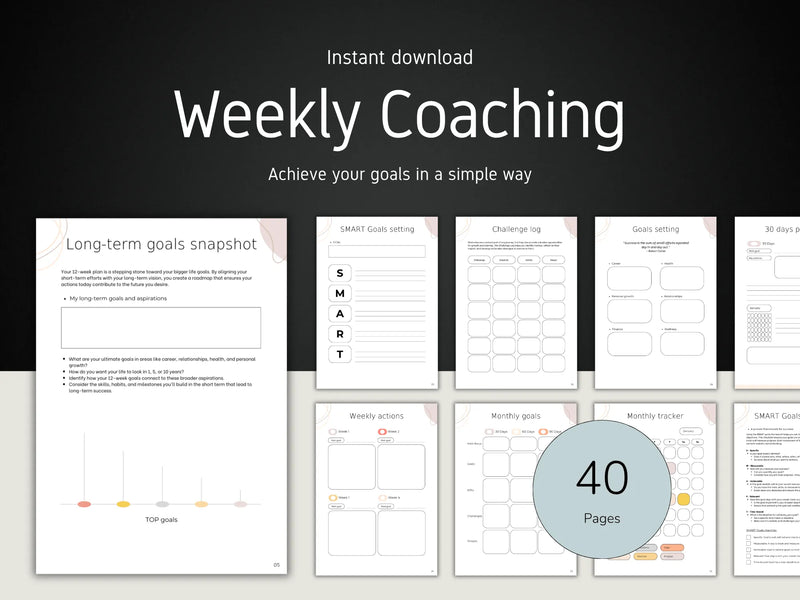
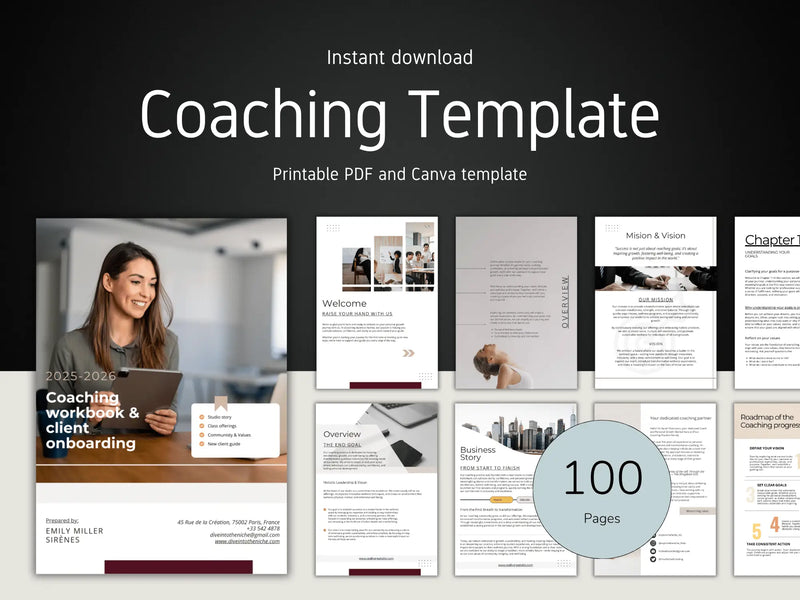
A repeatable process does two things: it saves you time and shows the client professionalism from day one. You can rely on ready-made templates, for example the Client Onboarding Template for bringing a new client on board and the Weekly Coaching Program Template for arranging the weekly structure of a program.
Step 6: Win your first client
Acquiring your first collaborators is the moment when theory meets market reality. An effective starting strategy should combine activities in the digital world with direct contact with people. You can, for example, build relationships with places that support personal development, fitness clubs, therapy practices, or local business organizations. Getting out and meeting people also works great: attending networking events and organizing open workshops.
- Example: A coach specializing in stress reduction can run a free emotion management workshop in a local office building or coworking space, and a career coach can offer mini advisory sessions for employees of smaller companies. At a later stage, it's also worth considering precisely targeted social media campaigns.
For your efforts to bring quick results, rely on three pillars that build trust:
- Publishing content about a specific problem: Instead of posting generic motivational quotes, create posts and articles that answer the real pain points of your target group (e.g., "3 mistakes that make managers burn out in the first quarter").
- Using testimonials and success stories (case studies): If you don't have paying clients yet, offer a few free or discounted trial sessions in exchange for an honest, detailed review that you can then publish.
- Simple sales materials: Prepare one clear document (a PDF or a simple one-page site) that clearly explains what your program involves, whom it helps, and how to sign up.
Step 7: Analyze results
Opening a thriving coaching business in 2026 is a long-term process that requires regularly monitoring progress and drawing conclusions from the actions you take. Once a month, it's worth stopping to analyze key indicators: the number of introductory calls held, the number of signed agreements, and the sources from which you acquired clients. Thanks to such a reliable summary, you will quickly see what brings the best results and what is a waste of time, which will let you continuously refine your niche, improve your offer, and optimize your prices as your experience on the market grows.
Templates for Coaches
If you want to speed up the start of your business, these templates fit the successive stages of building a coaching practice:
- Business plan for coaches, in which you lay out your vision, mission, offer, and business goals
- Client onboarding for the new clients
- Weekly coaching program structure, which works perfectly for coaches who don't have their own materials
- Marketing plan, in which you lay out channels, goals, and a schedule of marketing activities
You'll find more in the business templates collection.
Frequently asked questions
Do I need a certificate to start a coaching business?
In most countries coaching is not a regulated profession, so there is no obligation to hold a certificate. Accreditations, such as the ICF's ACC, PCC, and MCC levels, build trust, organize your craft, and provide an ethical framework, but clients still buy results above all. If you decide on training, choose a program that also teaches practical work with clients, not just theory.
How much does it cost to start a coaching business?
The barrier to entry is low compared with many other industries. The biggest expense is usually training, if you choose an accredited program. Added to that are business registration, insurance, accounting, a website, and tools for working with clients. The exact amounts depend on the country, so it's best to calculate your own monthly costs and add them to the financial goal from Step 3.
How much should a beginner coach charge?
It depends on the niche, country, experience, and whether you work with individual clients or with companies. A good starting point is to check the price lists of a few coaches from a similar niche, and then price a package rather than a single session. After collecting your first reviews, you can gradually raise your prices.
How do I get my first clients as a coach?
Most often, the first clients come from your own network of contacts and from referrals. Introductory calls, regular content about your niche's problem, and reviews collected from the first people you work with all help. Choose one or two channels and stick with them for a few weeks before judging whether they work.
Can I start a coaching business part-time?
Yes, many people start alongside a job. A few clients a month are enough to test your offer and collect reviews, but remember that sessions often take place in the afternoon or evening. It's worth checking beforehand whether your contract with your current employer contains a non-compete clause.


