Come gestire un’attività di coaching

La maggior parte dei coach non va in burnout a causa del coaching in sé, ma per motivi molto più profondi: si esaurisce nel farsi carico del peso emotivo dei clienti, nel non riuscire a stabilire confini sani, nel bisogno costante di dimostrare il proprio valore e nella pressione del mercato. Lavorare in questa professione richiede enormi riserve di empatia profonda che, senza un adeguato recupero, portano naturalmente all’esaurimento e alla perdita di coinvolgimento.

A tutto questo si aggiungono gli aspetti logistici e il cosiddetto lavoro invisibile: le lunghe ore trascorse al di fuori delle sessioni effettive con i clienti. Si tratta di tutto il lavoro preparatorio, che include una preparazione meticolosa degli incontri, la formazione continua, la supervisione, l’analisi dei materiali, oltre all’inseguimento dei contratti, alla riscrittura da zero delle note delle sessioni, alla definizione delle tariffe o alla gestione dei pagamenti. Nessuna di queste attività richiede di dedicare più ore; richiede semplicemente strumenti migliori per alleggerire il carico mentale.

Questa guida illustra gli ambiti che determinano come funziona davvero un’attività di coaching giorno per giorno: l’inserimento dei clienti, la struttura delle sessioni, la pianificazione aziendale e la programmazione degli appuntamenti. Per ogni fase abbiamo inserito modelli della raccolta CraftedCharts. 

Start every client relationship with a clear onboarding process

The first weeks with a new client set the tone for the entire relationship. Implementing a repeatable starting procedure, including gathering a detailed brief, sharing introductory materials, and holding an initial kick-off call: saves time, reduces a flood of questions, and builds full trust from day one.

Any unclear expectations at this stage regarding scope, communication, payment, or the very essence of coaching tend to resurface later. A solid onboarding process nips this in the bud before it even arises.

Client Onboarding Template & Welcome Pack handles this end to end, so you're not rebuilding a welcome packet for every new client.

Give every session a consistent structure

Professional coaching requires a proper welcome at the beginning or closing the meeting with a concrete action plan. This stable foundation is what so-called intentional improvisation relies on: you move away from a rigid script in order to flexibly follow whatever is happening "here and now" with the client.

Improvising without any base only works for a while until you can't remember what you discussed last time, or a client asks about a commitment from three weeks ago. A consistent session structure (goals, notes, tasks, and summary) turns every meeting into a real working tool, rather than just a conversation where you rely on memory.

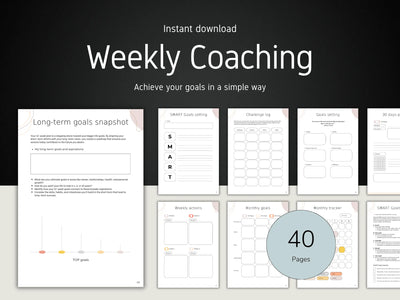
Structured Weekly Coaching Program for Life Coaches provides a ready-made plan so that each session naturally builds on the previous one.

Build a business plan you'll actually use

A lot of coaches skip business planning entirely, or write one once and never look at it again. The useful version is shorter than people expect: your positioning, your offer, your pricing logic, and a rough plan for getting clients, kept somewhere you'll actually revisit.

Coaching Business Plan Template is built specifically for coaching businesses, not adapted from a generic startup template.

Keep your schedule and materials in one place

Between session notes, client materials, social content, and documents, most coaches end up with files scattered across five different tools. Keeping your core materials in one editable, on-brand format saves the time you'd otherwise spend recreating things or hunting for the right version.

Canva Templates Bundle rounds this out with ready-to-edit materials you can adapt as your coaching business grows.

Frequently asked questions

How much should I charge as a coach?

Pricing depends on your niche, experience, and format (1:1 vs. group), but most coaches price around either a per-session rate or a package rate for a set number of sessions. A business plan template can help you work through your pricing logic rather than guessing.

What should be included in a coaching contract or onboarding pack?

At minimum: your services, session cadence, cancellation policy,payment terms, and confidentiality expectations, all part ofthe ethical practice standards professional coaching bodies like the ICF outline.

How many sessions should a coaching program include?

This varies widely by niche, but many structured programs run in blocks of 6-12 weeks, giving enough time to see measurable progress without an open-ended commitment.

Modelli per Google Sheets semplici e intelligenti | Libreria premium
Simple & Smart Google Sheets Templates | Premium Library

Modelli per Google Sheets semplici e intelligenti | Libreria premium

Modelli Canva semplici ed estetici | Libreria premium
Simple & Aesthetic Canva Templates | Premium Library

Modelli Canva semplici ed estetici | Libreria premium

Modelli aziendali professionali e strategici | Libreria premium
Professional & Strategic Business Templates | Premium Library

Modelli aziendali professionali e strategici | Libreria premium

Modelli SEO esperti e analitici | Libreria premium
Expert & Analytical SEO Templates | Premium Library

Modelli SEO esperti e analitici | Libreria premium

Modelli di post Instagram virali e strategici | Libreria premium
Viral & Strategic Instagram Post Templates | Premium Library

Modelli di post Instagram virali e strategici | Libreria premium

Modelli per giochi creativi e social | Libreria premium
Creative & Social Game Templates | Premium Library

Modelli per giochi creativi e social | Libreria premium