
The new rules of e-commerce
The e-commerce landscape is littered with outdated maps. For years, the standard playbook for scaling an online brand, whether on Amazon or your own Shopify store, seemed straightforward: source a product, optimize for basic keywords, pour money into Pay-Per-Click (PPC) advertising, and watch the revenue climb.
In 2026, that playbook is broken.
At CraftedCharts, we saw this shift firsthand. While managing our own growth on Shopify, we realized that the mechanics of marketplace success had fundamentally changed. Many direct-to-consumer (DTC) brands find themselves stuck, unable to break past stagnant sales plateaus or cross the million-dollar threshold. The problem isn’t a lack of effort or a poor product; it’s that the underlying infrastructure of e-commerce has shifted from a "keyword-matching" game to an "algorithmic-intent".
To capture traffic today, you must stop relying on isolated hacks and start building a repeatable, compounded operational system. We stopped chasing fleeting trends and began building the very templates and frameworks we use to run our own store. We’ve learned that to survive the shift toward AI-driven discovery, you must fundamentally rethink what SEO stands for: it is no longer about satisfying search engines, it is about providing the precise data points required for AI to recommend your brand.
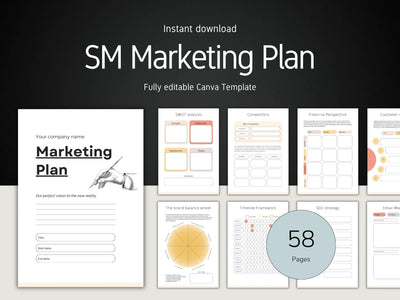
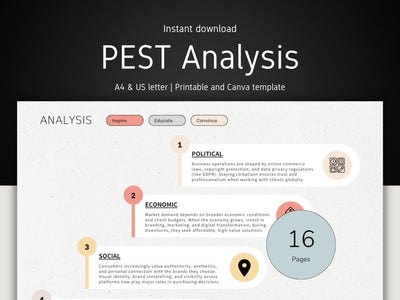
Premium digital Templates
Clear the noise and find your focus with systems built for the modern mind.
Check our Products →To unlock true global scale, brands must identify and dismantle five critical bottlenecks that quiet down growth.
Bottleneck 1: your brand is invisible to AI search
For years, the Amazon and e-commerce playbook was built on a rigid keyword-matching framework (the legacy A9 algorithm). Sellers thrived by stuffing titles, bullet points, and backend fields with high-volume search terms, effectively "gaming" the search results.
Check out our products

The marketplace has migrated to sophisticated semantic engines like Amazon’s COSMO (Common Sense Knowledge Generation) and its generative AI assistant, Rufus. These are not search bars; they are reasoning engines.
The shift from keywords to intent
These systems don't just "match" strings of text; they comprehend intent. When a customer asks Rufus, "What is a durable, leak-proof bottle for a toddler that won't melt in a hot car?", they aren't looking for a list of products that contain those words, they are looking for a verified solution to a specific problem.
We’ve observed that Rufus-assisted sessions convert at significantly higher rates than traditional search. As consumer behavior shifts from "endless scrolling" to "conversational querying," standard click-through rates for traditional listings are in freefall.
Why traditional SEO fails AI
An Amazon listing might rank well on page one for a keyword, yet remain completely absent from AI recommendations. AI models like Rufus do not evaluate a product in a vacuum; they synthesize data across a broad, fragmented system:
-
Your PDP (product detail page) structured data: Does your content explicitly answer common "who/what/where/why" questions?
-
Does the collective sentiment of your buyers match the claims in your description?
-
How does the rest of the web discuss your brand? Rufus cross-references your listing against social media mentions, community Q&A, and external articles to verify credibility.
If your product data is fragmented or "thin," the AI simply skips you. Navigating this environment requires moving away from manual keyword optimization and toward AI Optimization (AIO). We’ve found that the brands winning in 2026 are those that treat their product pages like "knowledge graphs", structuring their content so that AI can securely verify, cite, and recommend their assets to the right shopper at the precise moment of intent.
Bottleneck 2: The "Rebuild everything" trap
When e-commerce teams realize their copy is poorly optimized for modern AI, the knee-jerk reaction is to overhaul the entire catalog simultaneously. This approach frequently stalls operations, exhausts resources, and yields minimal return.
We advocate for surgical precision over brute force. We apply the Pareto Principle: focus your AI Optimization (AIO) framework exclusively on the core 20% of your catalog that drives 80% of your revenue. We use our own internal SEO checklist templates to keep our production pipelines lean, ensuring that every minute spent optimizing content is tied to a high-probability revenue lift rather than a vanity metrics chase.
The anatomy of AI optimization
AI engines require context, use cases, and clearly defined demographics to recommend a product.
The optimized approach explicitly details who the product is for and when it should be used, giving generative engines the precise data points they need to surface your listing during conversational AI queries.
Bottleneck 3: Ignoring the growth data in your account
Many mid-sized brands sit on years of rich advertising data, search term reports, and historical reviews without extracting actionable intelligence. They monitor high-level metrics like spend and ACOS, then close the dashboard. This is a missed opportunity to train your "brand brain."
Premium digital Templates
Clear the noise and find your focus with systems built for the modern mind.
Check our Products →
Deep intent analysis
Top-tier brands perform nuanced intent analysis on their search term reports. They group customer queries into behavioral patterns. For example, customers searching for a product for "travel" convert radically differently than those searching for "everyday home use." We use our customized tracking templates to segment these patterns, allowing us to align creative assets with the user's specific intent.
Capitalizing on feedback loops
Data hidden within customer returns and negative reviews often signals positioning flaws rather than manufacturing failures. If a notable percentage of returns cite a product as "smaller than expected," the issue is cosmetic. Refining the imagery or description to align customer expectations directly reduces return rates, preserves margins, and frees up capital for growth.
Bottleneck 4: Walking the endless PPC treadmill
With marketplace ad costs climbing steadily, relying solely on aggressive ad spend to drive sales is a fast path to margin erosion. If your team is struggling to keep acquisition costs sustainable, it's often a sign of underlying platform friction, explaining why marketing strategies often change as direct-response ad performance hits a ceiling.
Trading ACOS for TACOS
Escaping the PPC treadmill requires a shift from tactical metrics to holistic ones. ACOS only evaluates the immediate profitability of a campaign. Instead, we optimize for TACOS (Total Advertising Cost of Sale).
If your TACOS decreases while revenue climbs, your organic flywheel is turning; advertising is successfully acting as a catalyst for organic traffic. If TACOS remains flat or rises, you are effectively buying every single sale, which is a structural failure, not a marketing one.
The Five-bucket Ad system
To structure account architecture for long-term health, isolate budgets into five distinct operational buckets:
[Ad Strategy]
├── Bucket 1: Brand defense (Protect high-converting, core terms)
├── Bucket 2: Competitor conquesting (Target weak, poorly rated competitor listings)
├── Bucket 3: Market discovery (Test new keywords and experimental regions)
├── Bucket 4: High-intent retargeting (Capture shoppers with recent category history)
└── Bucket 5: Premium share of voice (Secure top-of-search for primary brand terms)
Mixing these strategies dilutes performance. Keeping them distinct allows you to measure the entire architecture by its net impact on TACOS.
Bottleneck 5: treating global scale as a series of one-off experiments
When local growth plateaus, most brands attempt international expansion using two flawed, high-risk methodologies:
-
The passive approach (FBA Export): Shipping products internationally directly from domestic warehouses. This introduces long delivery windows (e.g., 10+ days) that cannot compete with local, two-day Prime delivery;
-
The disjointed approach: Entering a single new market, spending months navigating regional quirks from scratch, and then repeating the entire painful, unstandardized process for the next country.
Building a repeatable expansion engine
True global expansion relies on a centralized, repeatable system. The playbook should be engineered once and then localized systematically across new regions:
Localization doesn't equal Translation International markets feature unique consumer behaviors, price sensitivities, and competitive landscapes. A marketing hook that performs exceptionally well in North America may fail in Europe, where buyers often demand different compliance verifications or product proof points at the same price tier. Understanding these cross-border variances is vital to capturing sustainable yield, illustrating the true ROI of content marketing when localized correctly.
A systematic infrastructure ensures local inventory placement for fast delivery, proper cross-border tax compliance, and tailored marketing from day one. Once this blueprint is established, entering your second, third, or fourth international market takes a fraction of the time, transforming global scaling from a high-risk experiment into a predictable growth engine.


