
Ranking for high-intent, commercially viable keywords is one of the most significant challenges in modern SEO. In highly competitive Search Engine Results Pages (SERPs), standard on-page optimization, such as placing the target keyword in the URL slug, page title, H1, and the introductory sentence, is no longer a differentiator. Most established competitors already execute these technical basics flawlessly.
Premium Digital SEO Template
Master your data with professional charts and dashboards meticulously designed to save you hours of manual work.
Explore the SEO Template →
When competing against sites with significantly higher domain authority, long-term success requires shifting focus from pure technical optimization to user signal optimization. Google continuously tests pages against one another to identify which resource satisfies search intent with the least friction.
To win these competitive battles, websites must optimize for two critical metrics: Click-Through Rate (CTR) and Pogo-Sticking Mitigation.
The core principle: Overcoming searcher laziness
A fundamental reality of digital marketing is that online users are inherently resistant to heavy reading. When searchers arrive on a landing page, especially one targeting a bottom-of-the-funnel (BOFU) transactional keyword, they want to verify immediately that they are in the right place. They do not want to wade through paragraphs of copy to understand a product's utility or a service's scope.
If a user is forced to read extensively to confirm that a page matches their intent, the likelihood of "pogo-sticking", clicking back to the SERP to find a clearer alternative, increases dramatically. High pogo-sticking rates signal to Google that a page is failing to satisfy the searcher, eventually eroding its rankings regardless of its backlink profile.
Reducing pogo-sticking without relying on copy
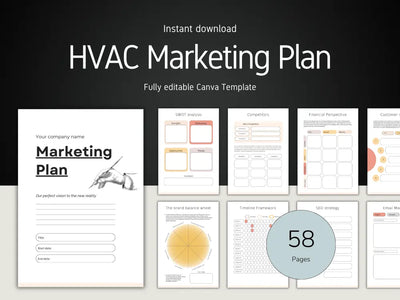
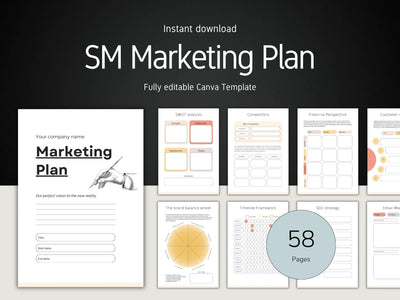
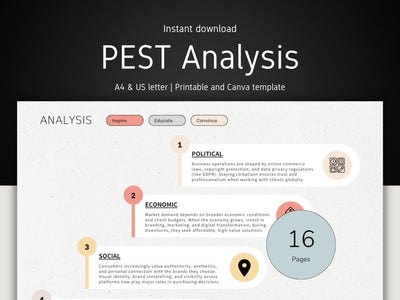
The most effective way to anchor a user immediately and prevent them from bouncing is to use highly strategic, context-rich imagery above the fold (the area of the page visible before scrolling).
Check out our products
1. The Hero Image as an instant value proposition
The primary image at the top of the page must do the heavy lifting. Combined with a clear, keyword-targeted H1 header and an immediate Call to Action (CTA) button, the hero image should allow the user to comprehend the exact offering within two seconds.
+--------------------------------------------------------+
|  H1: Primary Target Keyword                            |
|  [ Highly Relevant Hero Image / Use-Case Screenshot ]  |
|                                                        |
|  [ CTA Button: Try for Free / Call Now ]               |
+--------------------------------------------------------+
For software or SaaS applications, the ideal hero image is not a generic stock photograph, but rather a clean screenshot (or a composite of two screenshots) showcasing the core use case in action. This visual proof instantly demonstrates that the software satisfies the exact query that brought the user to the page.
2. Eliminating the need to read
Modern video games no longer ship with instruction booklets because creators know users prefer to learn through immediate interaction. On-page SEO should follow a similar philosophy. When the combination of a sharp H1, a descriptive image, and a clear CTA is executed perfectly, a high percentage of users will convert without ever reading the body text.
3. Visual storytelling below the fold
For users who do scroll down, the visual narrative must continue. Instead of dense blocks of text, the page layout should rely on descriptive H2 subheaders paired with supporting images, graphics, or UI mockups. A user should be able to scan the entire page, look only at the images and headers, understand the full value proposition, and find a secondary CTA at the bottom of the page ready for execution.
The danger of industrializing bad UX with mass AI content
The critical role of user signals explains why mass-produced, unedited AI content strategies frequently fail over time. While automated pipelines can generate thousands of keyword-optimized pages rapidly, this content often does a poor job of genuinely satisfying specific user intent.
Premium Digital SEO Template
Master your data with professional charts and dashboards meticulously designed to save you hours of manual work.
Explore the SEO Template →By flooding a site with text-heavy, low-utility pages that lack tailored visual UX, site owners essentially industrialize negative user signals. The resulting high bounce rates and systemic pogo-sticking signal to search engines a lack of overall site quality, frequently leading to sitewide algorithmic devaluation.
Maximizing SERP visibility and CTR
Before on-page visual structures can retain a user, the site must first earn the click in the SERP. In competitive verticals, small adjustments to title tags can significantly shift click volume away from higher-authority competitors.
The proven page Title formula
A highly effective, scalable framework for generating competitive title tags utilizes vertical dividers to balance keyword relevance with user incentive:
The conversion power of "Free"
When competing against established players, identifying and highlighting a low-barrier entry point is paramount. If a service offers a free tier, a free trial, or a complimentary consultation, explicitly including the word "Free" within the benefit section of the title tag serves as a massive competitive advantage. It directly targets user psychology, driving higher click-through rates even when positioned below a legacy competitor on the SERP.
Balancing authority and User Experience
In SEO, authority via backlinks and internal linking structures acts as a catalyst. It provides the initial momentum required to push a page onto the first page of competitive search results. However, authority alone cannot sustain a top ranking if the underlying user experience is flawed.
If a brand-new or lower-authority website pairs a targeted link-building campaign with a highly clickable title and an immediate, image-driven landing page, it can effectively compete with industry giants. The initial links secure the visibility, while the superior user signals solidify and defend the top-tier ranking for the long term.


